Alone Again Naturally Piano Sheet Music
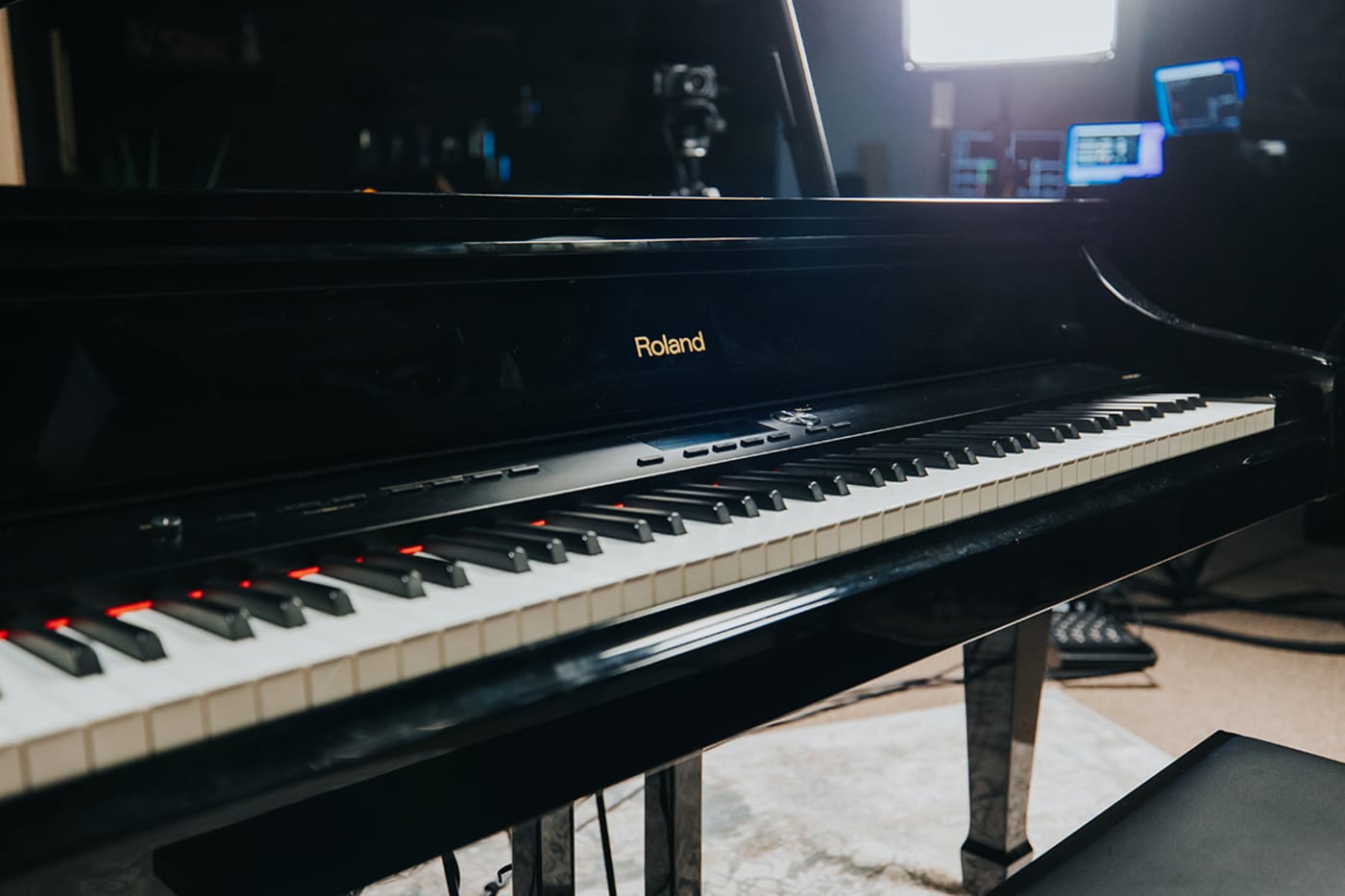
Desire to learn how to play the piano? You've come to the correct identify!
With 88 keys, a rich history, and many associated celebrities, the piano can be an intimidating musical instrument. But information technology'south also an accessible one. Anyone can learn the piano at whatever historic period and have hours of fun on it.
This comprehensive serial will take you from never touching the piano to playing your first chords and first vocal. You'll also learn fundamental skills, adept habits, and some shopping tips.
Table of Contents
Music Theory
Chapter v: The 1000 Staff
v.1 How to Read Music
5.ii Music Symbols
Chapter 6: More About Chords
6.1 How Chords Piece of work
6.2 How to Use Chord Charts
six.3 How to Employ Lead Sheets
Chapter 7: Your First Songs!
7.1 Easy Piano Songs to Larn First
Next Steps
Affiliate 8: Exploring Genres
viii.i Jazz Piano
8.2 Worship Piano
8.3 Classical Piano
8.4 Pop Pianoforte
Chapter 9: FAQ and Resources
9.1 Free Online Resources
9.2 Pianist Communities
ix.3 FAQ
Get started on the right pes (or rather, hand). Become iv Gratuitous lessons that will take you from sitting downwards on the piano for the first time to playing your first song.
🎹 Getting Started on the Piano
Role ane: GETTING STARTED
Affiliate 1: Earlier You Start
1.1 Why Learn How to Play the Piano? (5 Reasons)
If you're reading this commodity, you're probably already excited to larn how to play piano! Merely in case you're not convinced yet, this section is for you 🙂
Nosotros recollect the pianoforte is the all-time musical instrument to learn. Of course, we're biased as pianists, but at that place are compelling reasons to pick up piano every bit your first musical instrument:

Reason #1: You tin make astonishing sounds from day ane
Some instruments, like the violin or the trumpet, take skill simply to make a decent sound.
But pianoforte is rewarding from 24-hour interval 1 because you don't have to "make" the sound yourself. All you have to do is printing a fundamental that's attached to a hammer that hits a string to create a perfectly clear notation.
Nigh people can figure out a simple melody on a keyboard by playing around. Of form, there's more than to playing piano than eking out "Twinkle, Twinkle Niggling Star," just at least you won't exist squeaking through your starting time few lessons!
Reason #2: You lot learn both tune and harmony, treble clef and bass clef
A neat thing pianists tin can do is play both melody and harmony. Most instruments can't do this.
As a pianist, you'll proceeds a deeper understanding of both melody and harmony — that is, both the foreground and background of music.
Cognition of both treble and bass clef also helps. Many instruments just use the treble clef, but if you lot decide to selection upwardly the tuba subsequently on, that bass clef knowledge will come up in handy.
Reason #3: You lot are an independent music-making motorcar — merely you can also have fun with other people
Since pianos handle both melody and harmony, you don't require someone to accompany yous. Other instruments, such as the violin or guitar, require bands, backing tracks, or an accompanying pianist to audio "consummate."
But pianists aren't doomed to be solitary! Pianos are a colonnade instrument in many ensembles, from jazz bands to church worship teams. If you play pianoforte, nosotros encourage y'all to jam with other musicians. Information technology's a wonderful feel.

Reason #4: Pianos tin play practically every musical genre possible
Whether information technology's classical, jazz, dejection, boogie-woogie, rock, popular, or experimental avant-garde stuff, the pianoforte tin can handle them all.
At present, the skills required for unlike genres can be very different. But yous don't need a whole different instrument (such as going from steel-string to nylon-string guitar) to learn a new genre.
Reason #v: Piano knowledge lets you choice up other musical instruments with ease
Considering pianoforte requires fine motor skills, knowledge of both treble and bass clefs, and adept musicality, when you lot acquire pianoforte, yous gain transferable skills for other instruments.
Since learning piano, I've learned flute, electric and acoustic guitar, electric bass, and a few bones drum patterns. I believe these instruments were definitely easier to learn because I had piano skills as a foundation.
Are there any disadvantages to learning pianoforte?
This is a legitimate question. After all, no musical instrument is perfect.
I can think of 2 potential things pianists have to watch out for.
- Ear training. Violinists and guitarists accept to tune their instruments before every do session, which trains their ear. Pianos don't require daily tuning, and so pianists may lose out on built-in ear development.
- Isolation. Pianists can feel isolated because the pianoforte is such a cocky-sufficient instrument.

These aren't unfixable problems, though. To develop a practiced ear, actively heed to lots of music, gain a deep agreement of chords and harmony, and larn how to play by ear.
We also encourage you to detect a community with other pianists and musicians. Community is something nosotros're very passionate virtually at Pianote, which is why we've created an online space for students to gather, discuss, and troubleshoot.
Get gratis lessons, tips, and piano news delivered to your inbox every calendar week. Subscribe to The Note! 🎹 Make This Your Year of Getting Skilful at Pianoforte 🔥
1.2 What to Expect
Playing piano isn't cheap. And information technology does take up time.
We desire you to exist prepared and know what to expect. In this section, nosotros'll get over the cost of making piano a part of your life, as well as the fourth dimension delivery involved in becoming a competent pianist.
How much will playing piano price?
The core costs of learning piano include:
- Your piano or keyboard
- Lessons and books
- Accessories
- Maintenance
Your instrument will probable be your biggest cost, but at that place are enough of options here. Some pianos cost as much every bit a luxury car while entry-level keyboards can cost just a few hundred dollars.
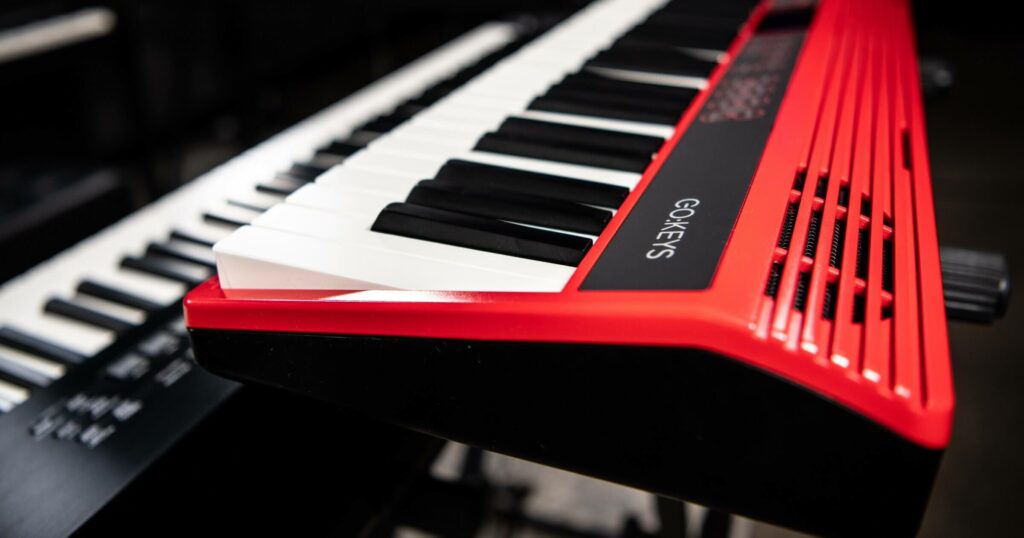
You may also be able to grab a piano for free or very low-cost if you buy used!
Piano instructors tin cost anywhere from $20 to $100+ per hr, and y'all should factor in transportation also. However, online piano lessons (like the Pianote Method) can exist significantly cheaper. We'll talk over the advantages and disadvantages of online vs. "in existent life" lessons in the Shopping Guide.
Different other instruments with amplifiers and moving parts, accessories for the piano are mostly optional. But y'all'll likely demand a metronome, a few books, a music stand up and pedal (if your piano doesn't have those), and some hardware and software if you want to record yourself.
If you buy an acoustic piano, you'll accept to hire someone to tune it once in a while. But electric keyboards don't need a lot of maintenance.

How much exercise I need to practice?
You've probably heard stories of professional pianists practicing an insane amount of hours from a very young age.
The pianoforte has a long history, and the calibre for performers today is very high. If you programme to become a professional pianist, expect to do a lot.
Simply you don't need to exercise viii hours a 24-hour interval to jam with a band, atomic number 82 your church worship team, or fifty-fifty teach beginners. If y'all but want to play your favorite songs and have fun, practicing 15 minutes a day will allow you to progress.
Of form, in general, the more you practice, the faster you'll improve. Only practicing is less virtually putting in the hours and more than almost honing the right skills.
The awesome matter about piano is that you don't need to be a top-level performer to reap incredible rewards. Pop songs can be as piece of cake or hard equally you want them (see 5 Levels of Tiny Dancer for an example of this!). And even classical icons like "Für Elise" are considered intermediate pieces.
one.three Learning Piano equally an Developed
Main commodity: Learning Pianoforte as an Adult
Are you also old to larn the pianoforte? Nope! If you're an developed beginner, y'all may actually have several advantages:
Adults tend to be purpose-driven. Whether it'southward a song or a skill, you're in accuse of what you desire to learn — non your parents or teachers! And when you're in charge, y'all're more motivated to take initiative.
Adults understand difficult work. After a lifetime's experience with responsibilities (school, work, childcare, etc.), yous understand what it takes to learn something new.
Adults can manage their time. While adults are busy people, they also accept initiative, which makes them perfect for self-paced learning. Information technology only takes fifteen minutes a day of practicing to see results.
Adults already know music. Unless you never listen to music ever, chances are you've had more exposure to music than most children. If you know how to go on a shell and sing a melody, you're well on your fashion to success.

For an encouraging word on learning piano as an developed, watch this video where Lisa shares some exercises you tin get started on correct away to kickstart your learning.
Chapter 2: Shopping Guide
2.one Buying Your First Piano or Keyboard
Main article: How to Buy Your Outset Piano
Buying your first piano or keyboard can be exciting and overwhelming at the same time. Hither are a few things to keep in mind:
What is your budget? The price range for pianos and keyboards is huge. At that place are keyboards going for less than $150 on Amazon. Meanwhile, concert grands tin can internet six digits.
How much space do you lot have? Mensurate the area you intend to fit your piano in and bring your measurements to a store.
Who do y'all alive with? If you live with roommates, family, or in an apartment building, you lot may desire to choose a piano you can use headphones with. Many audio-visual pianos likewise come with a placidity practice pedal.
Acoustic, digital, or hybrid? The sound quality of an acoustic piano is unparalleled, but digital pianos and keyboards are way more affordable and ofttimes come with useful features. A hybrid piano has elements of both.
Rent or buy? If you're uncertain nearly committing to the piano, yous may want to rent i kickoff. You may also be able to find affordable, loftier-quality second-hand pianos.
Features to Expect For
There are and then many products available — how exercise you know what features to prioritize? Nosotros accept the following recommendations:
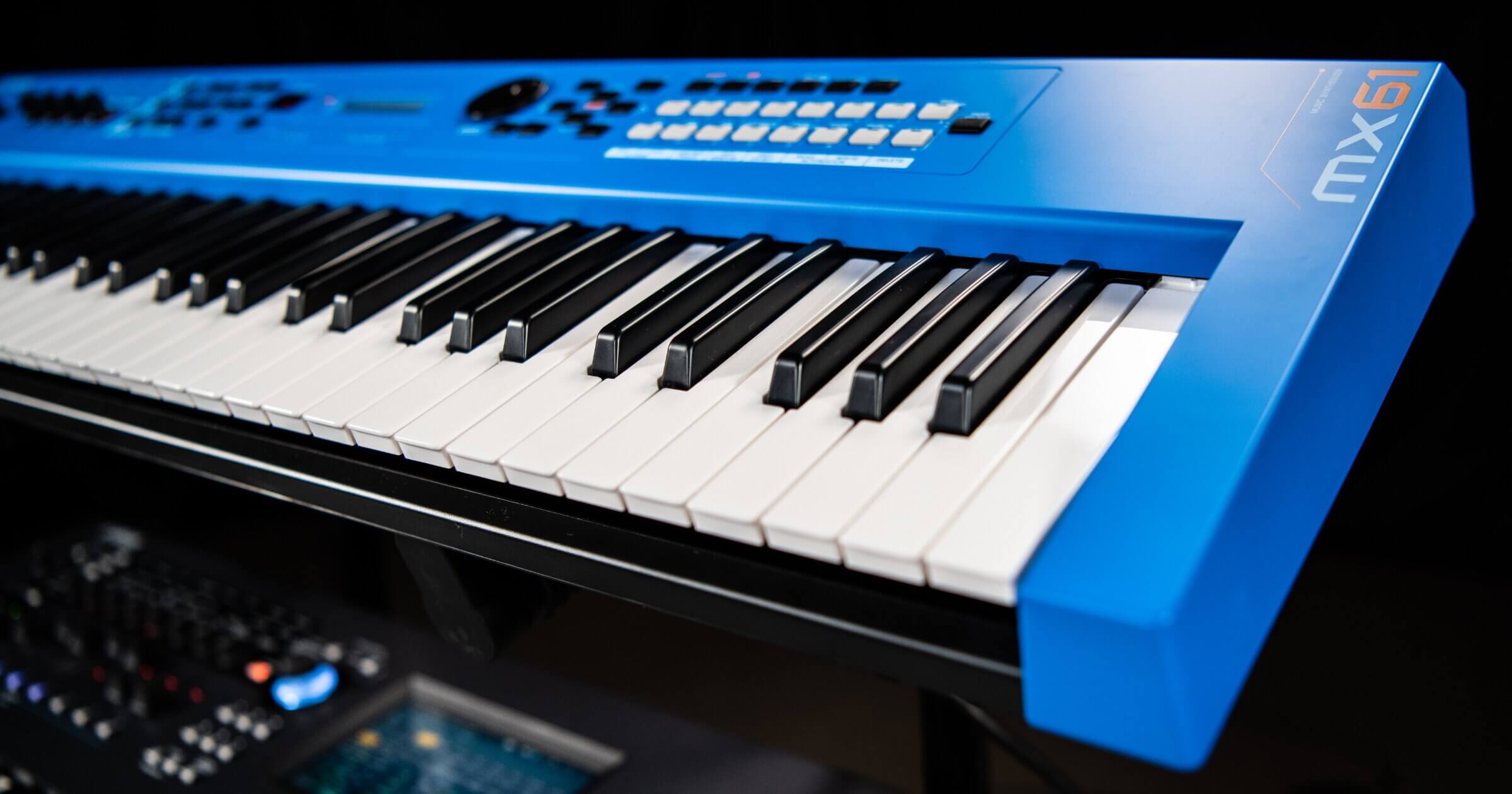
- Aim to get 88 keys. This is the standard number of keys on a piano, so you won't run out of notes. If you can't go 88 keys, become at least 61.
- Look for touch-sensitive weighted keys. This means the piano can be played loud or soft depending on how much force per unit area you put on it.
- Try before you lot buy! If possible, play a pianoforte before you lot purchase it. See how the keys reply to y'all playing them hard (loud) or softly.

Resource
We accept a brusque guide on how to buy your first instrument. For even more in-depth information, cheque out these free resources:
- Piano Heir-apparent is a comprehensive online e-book on how to navigate the piano market
- Piano Dreamers has a yearly digital piano buying guide and several in-depth articles that compare acoustic and digital pianos
- YouTube channels likewise present in-depth product reviews and comparisons, including sound comparison
- Lisa has gear recommendations you can find here
These videos may besides help!
two.two Piano Accessories and Maintenance
Pianos are pretty self-contained. Merely you may have a more rewarding experience if yous invest in a few accessories.
Piano bench. Unless y'all plan to use your pianoforte like a continuing desk, having something to sit on is a must. While any quondam chair volition work in a bind, a specialized piano bench gives you lot plenty of space to maneuver your body. Many piano benches are height-adjustable and offer storage, too.
Pedal. If your keyboard doesn't come up with a pedal, we highly recommend you invest in 1. Pedaling makes a big divergence and tin can fifty-fifty help yous audio improve when you're first learning a song.
Music stand up. Virtually pianos come with a built-in stand up. If yours doesn't, invest in a hardy stand that tin concur up sheet music, books, metronomes, and jotter.
Metronome. If you want to bring your playing to the adjacent level, wait to practise with a metronome. You can buy a stand-lonely
Recording equipment. Recording and then hearing yourself play can make a large divergence in improving your technique. Many keyboards come up with built-in recording adequacy. Otherwise, yous may want to invest in a microphone and some software.
Tuning. Audio-visual pianos need to be tuned by a professional and this volition cost between $100 and $200.
ii.3 How to Find a Piano Teacher
See too: How to Find a Piano Teacher and What'south the Best Style to Acquire Piano Online?
Other than your pianoforte, this is probably your about important investment.
Non too long agone, the only mode to learn piano was to visit a teacher once a week. Today, thanks to the Cyberspace and new technologies, nosotros have many more options.
Permit'due south take a look at the pros and cons of three major ways of learning: in-person lessons, app learning, and online learning.
In-Person Lessons

Pros:
- One-on-1 personal attention
- Live feedback
- No additional applied science required
Cons:
- College cost
- Lack of flexibility
App Learning

Pros:
- Can be very fun
- Gamified experience is motivating
Cons:
- May require additional equipment (ie. USB connection)
- Gamified feel may simplify playing, neglecting certain skills
Online Lessons

Pros:
- Flexible and affordable
- No additional equipment required
Cons:
- No real-fourth dimension feedback
Of course, nosotros at Pianote are biased towards the Pianote online learning method. Simply Sam, Lisa, and I wouldn't exist here if we didn't believe in our method.
The Pianote learning feel was crafted equally a "all-time of both worlds" solution. Here's a comparison between traditional lessons and Pianote to give you an thought of what nosotros offering:
| TRADITIONAL LESSONS | PIANOTE |
|---|---|
| In-person, personalized attention | Personal attention through Student Focus and contacting instructors |
| Tin add together upwards to $1700+ per year | $197 per year |
| Weekly lessons (you lot won't run into your instructor every day) | Learn equally often as you like, whenever you like |
| No born customs | Immediately be welcomed into the Pianote student community! |
| Unlikely to offer extended gratuitous trial | xc-mean solar day coin-back guarantee |
| May be against local Covid-xix restrictions | 100% virtual and socially distant |
If y'all're on the fence nigh joining Pianote, take a peek at the membership here.
Combine Methods
If online, traditional, or app learning doesn't cutting information technology for yous on their own, try combining methods. For example, y'all could have lessons with Pianote and connect with an in-person teacher once a month.
Whichever method you decide on, keep these two things in heed:
- Make sure your teacher's fashion aligns with yours. If not, it can be frustrating if you want to play jazz and your instructor but teaches classical.
- Find a teacher who is encouraging and patient. I personally studied under a traditional, classical pianoforte teacher who had high expectations. Only I stayed with her for over x years because she was conscious of my needs and had a wonderful sense of humour.
Part 2: MASTERING THE FUNDAMENTALS

Chapter iii: Take a Seat
three.one Good Pianoforte Posture
Meet too: Perfect Posture at the Piano (A Chiropractor'southward Guide)
Expert habits first from twenty-four hour period one. Before you start playing, ever stretch, warm up, and check your posture.
Sit on your demote facing the center of the piano. Brand certain your feet are
Recall these posture tips:
- Don't sit hunched over
- Warm upward with a few stretches earlier each practice session
- Pay close attending to your wrists, forearms, and shoulders
When you place your hands on the keyboard, relax your wrists. Don't tense your fingers—keep them loose so that they're slightly bent, not straight. Be conscientious not to let your wrists droop.
Good posture is essential to enjoying your time at the piano. If you're comfy, yous'll exist more motivated to practice, and you'll play with meliorate technique too.
Chapter four: Basic Skills
four.1 Keyboard Navigation and Musical Alphabet
See besides: Getting Started on the Piano and Piano in 7 Days
The piano keyboard may look dizzying with its vast array of keys (88, to be verbal). But once yous understand the patterns that make information technology work, it'south actually quite unproblematic.
How to Find Middle C
Take a await at your keyboard. Find the black keys—encounter how at that place are sets of two and sets of three? We'll utilize these sets of twos and threes to discover Middle C.
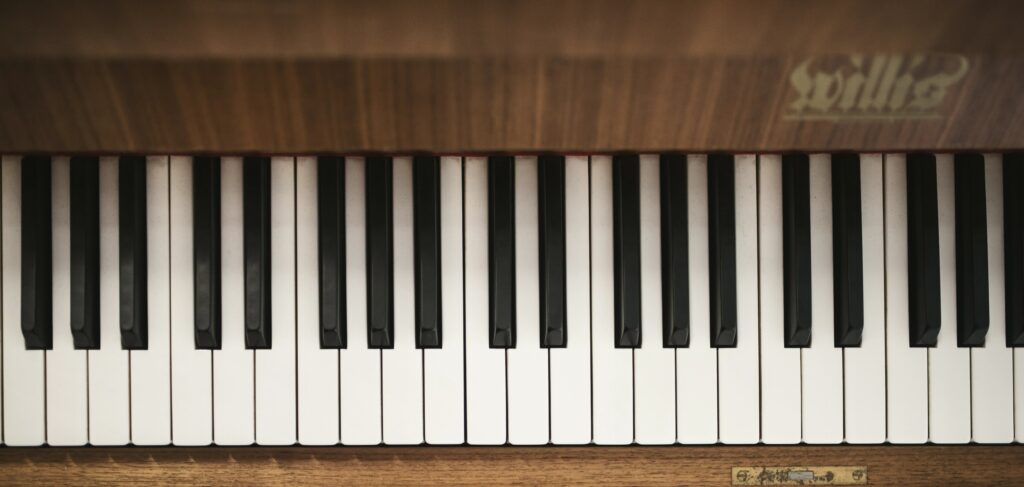
Middle C is the get-go note you lot'll learn on the piano. Information technology'due south smack dab in the middle of the keyboard, usually where the brand proper noun of the piano is.
Find a set of ii black keys in the middle and play the white fundamental on the very left: this is Heart C!
Think where Middle C is. You'll use it to orient yourself around the rest of the keyboard.
The Musical Alphabet
Now for your outset theory lesson! In music, we name notes later the alphabet. The white key later on C is D, the i subsequently is Due east, then on. The musical alphabet stops at Thou, yet, so instead of a note called H nosotros just repeat from C again.

If you lot're wondering what all those black keys are chosen, they're half-steps betwixt the white notes and they're chosen
In one case you understand the musical alphabet, you can motility on to the 5-finger scale!
iv.ii How to Play the Five Finger Scale
The five-finger calibration is a basic skill that volition introduce you to a finger movement that is fundamental to pianoforte-playing.
The Right Mitt
Permit's become dorsum to Middle C. Place your right thumb on Heart C. In piano, we call this finger 1.
Next, place your index finger on the next white fundamental, D. This is finger ii. Place your remaining fingers on the other white keys. This means finger 3 goes on Due east, finger 4 goes on F, and finger five (pinky) goes on G.
Effort playing these notes in order (ane-2-3-4-v). Then, play it in reverse (v-four-3-ii-1). Congratulations, you've but played your first C major five-finger scale!
If this feels weird at first, that'southward totally normal and okay. It's a new movement, so it'll take fourth dimension to get used to. Your fingers may want to stick together, especially fingers 3 and 4. To improve, challenge yourself to play all five notes as evenly and articulated equally you can.
Play the right-hand five-finger scale a few times. Once you go the hang of information technology, move on to the left hand.
The Left Paw
Notice the C beneath Eye C and identify your left pinky (finger 5) on it. Then follow upwardly with the rest of your left-hand fingers.
Once again, play these notes up and downwardly a few times until it feels more familiar.
Simply…how practise pianists play more than five notes in a row without running out of fingers?!
This happens quite frequently, especially with scales. Pianists use techniques like tucking under and crossing over to chop-chop play long, unbroken streams of notes. This is why practicing scales is so important for pianists who want to play faster.
4.3 Your Kickoff Chords
You lot may be interested in: Chord Hacks – a set of 6 free lessons to jumpstart your understanding of chords.
Chords are the edifice blocks of music. They're used in most Western music traditions, including pop, jazz, and church building songs. Understanding chords will assist you progress in piano on both the practical and theoretical fronts.
At present, there'due south a lot of theory behind chords and chord progressions — theory that's quite fascinating — but to make things elementary in this guide, we'll learn iv basic chords in their root position and how to move between them.
The names of the 4 bones chords nosotros'll learn are: C major, Yard major, A small, and F major.

Nosotros'll larn these chords in their triad form in root position, which means they'll all take a similar "shape."
C Major Triad in Root Position

On your right hand, place finger i (thumb) on C and finger 5 (pinky) on G. Play these notes together. They are the outer "shell" of the C major root position chord. Once this feels comfy, try playing E with finger 3 (your middle finger).

Try the same matter on your left hand. Identify your left-hand finger 5 on C and finger one on G to course the chord trounce. Then, play Eastward with finger three.
The same fingering applies to the other root position Thousand major, F major, and A modest chords.
It's worth repeating: chords are the edifice blocks of music. Therefore, mastering them will accept you to the adjacent level of playing, improvising, and connecting chords with riffs and fills.
Cheque out our free Chord Hacks resource if you desire to dive deeper into chords. Otherwise, we'll revisit chords in a subsequently theory department.
4.4 Playing with Both Hands
Master article: Play Pianoforte with Both Easily
Permit's become one thing out of the mode: playing with both hands feels weird. At least at get-go.
Paw independence is something you lot'll continually work on as a pianist. Even advanced pianists have challenges with hand independence.

The Five-Finger Calibration in Both Hands
Yous already know the five-finger scale. At present permit's try playing it with both hands.
When you lot play the five-finger scale upwards with both easily, the fingering with look like this:
Right hand: 1-two-three-4-v (C-D-E-F-1000)
Left hand: v-4-3-two-1 (C-D-E-F-G)
When you play the five-finger scale down with both hands, the fingering will await like this:
Right hand: 5-iv-three-ii-1 (Thou-F-E-D-C)
Left hand: i-two-3-4-five (Chiliad-F-E-D-C)
If this feels like shooting fish in a barrel, try playing loudly in ane hand and softly in the other. And then, switch.
four.v How to Play Scales (Hands Together!)
Chief article: How to Play Piano Scales – Easily Together
If you're curious about scales, now is a good time to start.
You've mastered the five-finger scale, but what happens when y'all want to play the entire C major scale, from ane octave to the next?
Unless you master the right technique, you lot'll run out of fingers! And then, before playing hands together, be certain to do playing a total-octave scale on your right and left hands.
C Major – Right Hand
Up:
Notes: C-D-E-F-G-A-B-C
Fingering: i-two-3-ane-two-3-4-5
Down:
Notes: C-B-A-G-F-E-D-C
Fingering: v-four-three-ii-1-3-2-i
C Major – Left Hand
Up:
Notes: C-D-E-F-G-A-B-C
Fingering: five-iv-3-2-1-3-2-i
Down:
Notes: C-B-A-Chiliad-F-E-D-C
Fingering: one-two-iii-1-2-iii-4-five
Putting hands together takes practice. The technique is more than easily explained through video, then sentry this lesson to get the basics.
Part iii: MUSIC THEORY
Affiliate 5: The Thousand Staff
If y'all want to master rudimentary music theory, bank check out our free Music Theory for the Dropouts series.
v.1 How to Read Music Annotation
Main Commodity: How to Read Notes
You know the musical alphabet. Now permit's learn how to spell some music!
The commencement matter you should familiarize yourself with is the grand staff:

Almost piano music is written on the grand staff. The grand staff is special to the pianoforte because there's a pinnacle and bottom part, usually denoting right and left easily.
We'll briefly touch on the parts of the grand staff here, but for a more thorough breakup, we recommend watching this lesson.

Treble Clef
In full general, pianists play notes on the top staff, the one with the treble clef, with the right hand.

Bass Clef
Notes on the bottom staff, the 1 with the bass clef, are usually played with the left manus.
In each staff (treble and bass), in that location are v lines with spaces between them. This is where our notes sit down.

The higher upwardly we move the lines and spaces, the higher the pitch!
Notes occupy lines and spaces and they all accept names. At get-go, it'll feel intimidating to memorize all the notes and their locations, and then these acronyms might aid.

Space NOTES
Treble clef: FACE
Bass clef: All Cows Eat Grass

LINE NOTES
Treble Clef: Every Good Boy Deserves Fries
Bass clef: Practiced Boys Deserve Fries Ever
Merely nosotros're going to let you in on a fiddling cloak-and-dagger…
You don't need to read every single note!
To read music faster, we musicians employ some tips and tricks, such as:
Landmark notes. Selection a few notes on the staff to know really well, such as G in the treble clef. Then, everything else is just in relation to Grand. For example, a stride up from Grand is A, and the line note below G is E.

Intervals. Being able to tell the altitude between notes is also a shortcut. You can learn more than nigh intervals here and see this shortcut broken downwardly in this post.

Patterns. Music is fabricated up of patterns. Knowing how to recognize patterns is a shortcut to reading music. For example, if y'all can recognize a scale, you'll know that notes are but going upwardly or downwardly step by stride.

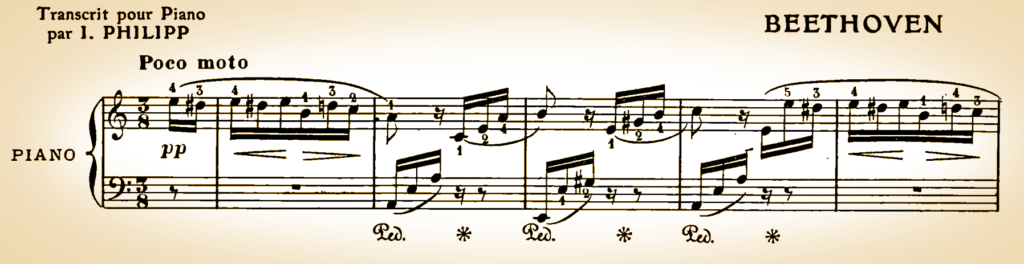
This is a section from Mozart's Sonata in C Major and you can see that it's really not much more than than a scale of notes stepping upwards and down.
Rhythm
What a note looks similar can tell you how many beats it has. In 4/four fourth dimension signature, the post-obit notes have this many beats:

These notes accept fraction names similar quarter note, half annotation, dotted one-half note, and whole note.
Time Signatures
See also: Basic Time Signature
The time signature consists of two numbers at the beginning of the staff. The top number tells you how many beats there are per measure (a measure section of music enclosed past bar lines). The bottom number tells you what notation value takes i shell.

"iv" means quarter note so 3/4 means "3 quarter notes per measure" and 4/four means "iv quarter notes per measure."
Key Signatures
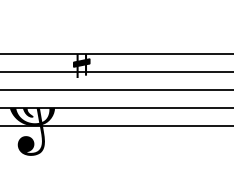
The key signature is located right before the fourth dimension signature. It tells y'all what central y'all're in by listing all the sharps and flats (or lack thereof) in the piece.
And then, if you see the following fundamental signature, information technology means all Fs in the piece should be played as F sharp (F#) unless a notation has a natural symbol.
To empathise the key signature, you'll need to learn about key. In a nutshell, each key (ie. C major, F sharp minor, B flat major) has a unique number of sharps and flats.
Understanding keys is non absolutely vital when you're first starting out on the piano, but knowing the Circle of Fifths will come up in handy. So check out this lesson if you desire to learn more nearly keys.
5.2 Music Symbols
Main commodity: Making Sense of Music Symbols
You can probably tell that there's a lot more than notes and staves in sail music. Here are other things you may meet when sight-reading music.
Accidentals
A sharp ways we enhance a annotation up past 1 one-half-step. A apartment means we lower a note down by 1 half-step. Therefore, F precipitous is the black key immediately right of F, and B apartment is the blackness cardinal immediately left of B.
A natural tells yous not to sharp or apartment a note.
Accidentals are sharps, flats, and naturals outside the key signature that appear in music. The general rule is, if a note has a abrupt (or flat, or natural), all instances of that notation thereafter in the same measure should likewise exist sharped.

Dynamics
Main commodity: What Are Dynamics?
Dynamics are what makes a good piano operation sound bully.
Dynamics are markings that tell players whether to play something loud, soft, or something in between. Here are some common dynamic markings:
- Forte (f) – loud
- Piano (p) – soft
- Mezzo forte (mf) – medium loud
- Mezzo pianoforte (mp) – medium soft
- Fortissimo (ff) – very loud
- Pianissimo (pp) – very soft
- Crescendo – gradually get louder
- Decrescendo – gradually become softer

Crescendos and decrescendos are the "alligator oral cavity" symbols that indicate the music should be growing louder or softer.
Expression
At that place are many other symbols that betoken how a piece of music should be expressed. Every bit a beginner, you might run into these:
- Phrasing: curved lines above music that indicate those notes should be connected, as if sung in one breath
- Legato: play lightly and connected in phrasing
- Staccato: shown by dots higher up/beneath a notation caput, this ways playing notes curt and detached (similar hopping)
- Ritardando (rit.): tedious down
There are too special words that straight speed (tempo):
- Largo: play slowly and broadly
- Allegro: play fast
- Moderato: play at a moderate speed
- Presto: play very fast
- Andante: play at a "walking pace"
- Lento: play slowly
- Vivace: play at a lively and fast space
- A tempo: return to previous/original tempo
It may seem overwhelming to memorize all these words off the bat, especially since about music terms are traditionally in Italian, French, or German. Don't overwhelm yourself at showtime! As your exposure to sheet music grows, you'll naturally choice upwards the language of music notation. But acquire terms ane at a time when yous encounter them.
Affiliate 6: More than About Chords
half dozen.ane How Chords Work
Nosotros've mentioned that chords are the building blocks of music, just what does this mean?
In a nutshell, a chord is a grouping of notes played together at the same time, that sound overnice together. Chords oft take names, similar "C," "Amin7," or "Gsus4." I like how classical piano teacher Cassi Falk explains chords and their names:
Y'all can retrieve of [chords] like you lot would a word in a sentence. When you lot run into the word 'cat', yous don't think of the private letters, c-a-t. Yous think of the whole organisation of messages that forms the discussion and makes yous think of a true cat. That's basically the idea with chords.
Cassi Falk, Music Theory for the Dropouts #v
As a beginner, the chords you're nearly likely to run across are triads. These are three-note chords and there are two main types.

Major triads sound "happy." The center note can be calculated by counting iv half-steps up from the root (bottom) note and the elevation annotation can exist found by counting three one-half-steps up from the middle note.

Minor triads sound "sorry." The middle notation can be calculated past counting three one-half-steps upward from the root (lesser) note and the meridian note can be found by counting 4 half-steps upwards from the middle note.
Chord Progressions
The magic of chords happen when nosotros play several in a row, forming a chord progression.
Chord progressions harmonize and move a piece of music forrad. Yous may be surprised to larn that in virtually all of Western music history — from J.S. Bach to Justin Bieber — is based off similar chord progressions.
To meet this in action, check out this video (You Love Classical Music – You Just Don't Know Information technology!).
One time you're comfy playing a few chords, bank check out the I-Five-six-IV progression, which will unlock hundreds (not an exaggeration!) of songs.
vi.2 How to Use Chord Charts
A chord chart is a certificate that shows a song's lyrics with the names of chords above the lyrics as the chords change.
Knowing how to read and play from a chord chart will have you far. That's because these days, yous can find the chord chart of nigh whatsoever popular song on Ultimate-Guitar.com for costless.

Major chords are indicated past but their letter, similar C for C major or F for F major. "Yesterday" begins with a simple F major chord.
Small chords will have a lowercase "m," such as the Dm and Em7 chords in "Yesterday." You lot tin can play a lot of songs with just major and pocket-size chords, but other types of chords add color to music.
Slash Chords
A slash chord, similar F/E in "Yesterday," means yous play the note afterward the slash as your bass annotation while your right mitt plays the chord F on tiptop.
7th Chords
Standard major and modest chords like Em accept a root, third, and fifth (E-G-B). Seventh chords similar Em7 take an added 7th (E-G-B-D).
7th chords have a dreamier sound and are frequently used in jazz pianoforte.
Sus Chords
No, sus chords are not suspicious. "Sus" means "suspended" and it's when you switch out a note for some other. And then Gsus4 would mean switching out the third (B) for a fourth (C) to form G-C-D.
To learn more chords, bank check out Read and Play Complicated Chords on the Piano.
vi.iii How to Use Lead Sheets
Lead sheets are somewhere between a total score of sheet music and a chord chart. A lead sheet shows you just the tune of a vocal and the chords higher up the melody.

Pb sheets are useful because you can confidently play the melody of a song without needing to figure it out by ear, while having aplenty artistic room to experiment with the accompaniment.
The fun comes when you know a tune and the chords well plenty to add in your own riffs and fills.
Chapter vii: Your First Songs!
vii.1 Like shooting fish in a barrel Pianoforte Songs to Learn First
Can you play songs as a beginner? YOU BETCHA. Here are a few song tutorials to bank check out
"Imagine" past John Lennon
I song we like to recommend beginners try out in one case they master the fundamentals in Function 2 is "Imagine." (Yep, that "Imagine" by John Lennon.)
"Imagine" is a adept vocal for beginners because it'due south in C major (all white keys and no flats or sharps!) and sounds great fifty-fifty when played slowly.
Someone You Loved (In 7 Minutes!)
Pop songs are a brilliant place to start because chances are, you're familiar with the tune already and near popular songs use similar chord progressions.
"Someone You Loved" is an iconic song that's actually very uncomplicated. This tutorial will teach you the basics in vii minutes!
Happy Birthday
"Happy Birthday" is a simple must-take in your piano playing armory. This song is perfect for birthday party sing-alongs. Afterward all, how else can y'all embarrass your friends on their altogether?
Nosotros'll show you a basic mode to play this as well equally a jazzier version.
Get free lessons, tips, and piano news delivered to your inbox every calendar week. Subscribe to The Note! 🎹 Make This Your Year of Getting Good at Piano 🔥
Part 4: Adjacent STEPS

Chapter 8: Exploring Genres
8.1 Jazz Piano

If you've ever seen a jazz or cocktail lounge pianist play, you lot may have plant information technology a magical, surreal experience. Jazz is rooted in improvisation, then how the heck do these vivid musicians conjure up delightful melodies seemingly from thin air?
Well, it's not exactly magic. Jazz pianists have a very solid grasp of chord theory which gives them shortcuts to improvise upon. If yous want to go started with jazz, we recommend learning 7th chords, understanding the ii-V-I progression, and mastering
Jazz Piano Tutorials
Here are some free lessons to help y'all become started:
- The 2-5-1 Chord Progression (Jazz Piano 101) – the fundamental jazz chord progression
- "Jazz Up" Your Piano Playing (Make Anything Audio Jazzy) – introducing 7th chords into "Twinkle, Twinkle Little Star"
- Introduction to Modes – some other core jazz concept
The Pianote Members Area likewise has a jazz learning path that teaches y'all how to improvise on a jazz standard, "Autumn Leaves."
8.2 Worship Piano

We've noticed that topics about playing pianoforte for a religious customs are amid some of our virtually pop content. Which is awesome because music is all about community!
Playing for your identify of worship can be incredibly rewarding because you get to exist office of a team. Collaboration takes practice, and playing with a band builds very useful skills.
Worship Pianoforte Song Tutorials
Here are some tutorials to become you started:
- three Like shooting fish in a barrel Worship Songs for Piano – tutorials for Christian rock hits similar "Amazing Grace (My Chains Are Gone)," "10,000 Reasons," "Corking Are Y'all Lord"
- Play Piano at Church (Worship Piano) – an introductory lesson on what y'all need to know to play pianoforte at church building
- Play Beautiful Background Music at Church building – for those tranquillity, in-between moments
Pianote also offers a full course on how to play with a worship band (comes free with your Pianote membership!).
viii.three Classical Piano

When most people call up of piano, they think of classical music.
The pianoforte has been a mainstay in classical music for centuries. And people like Chopin, Liszt, and Debussy accept divers what many people imagine as the "piano audio."
Classical music is often considered more advanced because y'all need to exist pretty comfortable reading canvas music. (Even though, reverse to popular belief, classical music has a rich improvisation history!)
Classical Piano Tutorials
We take several simplified classical piano tutorials available that break down iconic pieces:
- 3 Classical Songs That Are Perfect for Beginners – "Für Elise," Minuet in G Major, "Gymnopédie No. 1"
- iii Easy Classical Piano Pieces to Audio Similar a Pro – "Canon in D," "Moonlight" Sonata, Prelude No. i in C Major
- 7 Like shooting fish in a barrel Classical Piano Songs to Learn Kickoff – a list of attainable classical pieces
Ane good affair about classical music is that most sail music has expired copyright and is available for free through the Petrucci Music Library.
8.four Popular Pianoforte

Playing popular music is fun because, for many of the states, pop music is what we heed to on a daily basis. You know these songs in and out.
The advantage of playing pop music is you lot can brand songs as simple or as complicated as you'd like. You can run into this in activeness with Lisa'south "5 Levels of 'Tiny Dancer'" video. You tin also choose to play forth to your own singing or play the tune on the piano.
Pop Tutorials
We take lots of free tutorials available for famous pop songs, such as these four easy ones:
- "Cups" – Anna Kendrick
- "Hello" – Adele
- "Just the Mode Yous Are" – Bruno Mars
- "Someone Y'all Loved" – Lewis Capaldi
Here are another tutorials to check out:
- 10 Easy Piano Songs Everyone Should Know – includes hits similar "Let It Exist" (The Beatles)
- iii (Like shooting fish in a barrel) Romantic Piano Songs – "The Rose" (Bette Midler), "Can't Assistance Falling in Dear" (Elvis Presley), "A Thousand Years" (Christina Perri)
Chapter nine: FAQ and Resource
nine.1 Free Online Resources
Playing piano tin can get expensive.
Fortunately, thanks to the cyberspace, in that location are numerous free ways to develop skills, play your favorite songs, and master music theory. Here are several 100% costless online resources to help with your journey.
Shopping Guides
Pianoforte Dreamers is a super in-depth weblog that covers piano learning options and gear. They write very detailed articles like The Ultimate Guide to Buying a Digital Pianoforte and product reviews for keyboards, recording equipment, learning methods, and more than.
Piano Heir-apparent is a biannual publication that covers what's new and hot in the piano-buying market. It is accessible for free on the cyberspace and includes in-depth articles on subjects like how to best buy used instruments.

Sheet Music

The Petrucci Music Library a.1000.a. the International Music Score Library Projection (IMSLP) is an online database of (mostly) public domain canvass music from classical composers like Bach, Beethoven, Chopin, and Mozart, whose sheet music copyright has expired.
8notes is a library of sheet music for pop tunes, arranged for beginners.
Ultimate-Guitar.com contains chord charts for piano, guitar, bass, and ukulele. Chord charts tin can be toggled to "pianoforte" to show diagrams of how to play each chord.
Recording and Composition
Brazenness is a free, open-source, multi-platform recording software that allows yous to record and edit music.
Musescore is a free sheet music writing programme with powerful features.

Learning
The Note (this blog!) – okay, nosotros're a trivial biased here. But we piece of work every 24-hour interval to make The Annotation the best complimentary piano learning resource on the web. You'll detect tons of resources including song tutorials, technical exercises, theory explanations and in-depth articles like biographies of famous pianists.
YouTube is another groovy resources. Content creators on YouTube, from major companies to individual pianists, brand how-to videos every day. These include everything from song tutorials to mini-documentaries that explain the theory behind your favorite compositions.
9.2 Pianist Communities
The piano is a pretty cocky-sufficient, independent instrument. Unfortunately, this means pianists tin be isolated.
But communities are great resource because if you're struggling with something, you can consult with your customs. Peradventure someone else has been there, solved that.
That all being said, finding a community isn't always easy especially with pianists, because pianos aren't exactly portable. However, in that location are numerous online communities that are great resources:
- r/piano subreddit
- Pianostreet forum
You tin can likewise upload videos of your playing online and request feedback.

A discussion virtually the Pianote customs…
Nosotros're very passionate nigh community at Pianote partly because we share a studio with drummers, guitarists, and other musicians and we've seen first-manus the value of collaboration.

That's why we created the Pianote Members Area as a identify for students to learn piano together. Pianote members tin also attend live Q&A sessions, mail service discussions in the forum, and share content in a private Facebook group.
If you're non sure nearly committing to a membership, you can have a look backside the paywall here.
9.3 Ofttimes Asked Questions
If yous're excited to learn pianoforte but are bursting with questions, you've come up to the correct identify!
- Am I also old to learn how to play piano?
- Practice I absolutely demand to know how to read sheet music?
- What's the all-time way to practice?
- My encephalon knows what to do, merely my hands refuse to co-operate!
- What'southward the all-time piano to buy for a beginner?
- How long does it have to get good at piano?
Am I too erstwhile to learn how to play piano?
No! In fact, we think age is an reward.
Adults tend to accept established work habits and are ofttimes very driven to learn music. After all, you're taking music lessons for yourself, not a parent or teacher!
As an adult, you've also had lifelong exposure to music. You understand rhythm, melody, and may fifty-fifty be able to figure out tunes by ear.
Then endeavour learning piano. If annihilation, the health benefits are first-class reasons to commencement. As is your passion to create music.
Practise I absolutely need to know how to read sheet music?
Some of the most successful musicians e'er, including all the Beatles, don't know how to read music. And Mozart was famous for beingness able to recreate songs past ear. So, short answer: no.
That being said, knowing how to read music is an incredibly useful skill. Sight-reading is encouraged if you want to play classical music you're essentially recreating a vocal exactly how it was written.
Withal, if yous want to play pop music, knowing how to read chord charts should be enough. Sheet music is useful, but it can too limit your creativity. On the other paw, chord charts and lead sheets encourage original improvisation while providing guidance.
At the finish of the day, pick a learning method that is rewarding for you lot and your musical preferences.
What's the best style to practice?
How and what to practice is a mutual question we get. You've probably heard stories of professional pianists who do an insane number of hours, simply how you exercise is more of import than how many hours y'all put in.
Do with a plan and accept goals in listen. A typical practice session may go like this:
- Warm-up: five-ten minutes
- Technique, such equally scales and arpeggios: 10 minutes
- Songs: 20 minutes
- Fun/improv: 10 minutes
Information technology'southward also more than constructive and efficient to target things you lot struggle with, rather than playing songs from starting time to end, over and again.
Consistency is besides important. It may exist more effective to practice 10 minutes a day, every day, than one hour of binge-practicing and so no exercise for the rest of the week.
My brain knows what to do, but my 2 hands just won't co-operate!
This is a very common problem for pianists of all ages. Fifty-fifty experienced pianists struggle with hand independence from time to time.
Struggling is actually a practiced sign — it ways yous're challenging yourself to acquire something new. Just proceed practicing — it takes time. If a hand independence exercise comes too easily to you, information technology means it's too easy!
What'south the best piano to purchase for a beginner?
Try to get an 88-key keyboard (or at to the lowest degree 61 keys), and make certain the keys are touch-sensitive. This ways if you press on them lightly, you'll make a soft sound. And if you press on them hard, you'll play difficult.
Lisa also has a curated list of trustworthy products y'all tin can browse. For beginners, we recommend the Yamaha P125 and Roland FP30, which are both under $1000.
How long does information technology take to become good at piano?
This is a difficult question to respond considering information technology depends on and so many different things: your definition of "good," how much you exercise, and how you practice.
One thing is for sure, though: simply because someone can play an impressive-looking song, doesn't mean they are a proficient pianist.
But to answer the question, you can acquire basic skills pretty quickly if you lot're diligent. In fact, yous tin can go from never having touched a piano to playing "Imagine" in seven days.
Progressing from there is a affair of fourth dimension and dedication. If ever experience frustrated, you lot're not alone! At that place are ways to re-motivate yourself, such as re-visiting why you lot want to acquire how to play the pianoforte.
We hope this guide jumpstarts your pianoforte journeying! Honestly, though, nosotros're so happy you're hither. Welcome to the piano family!
*This commodity contains affiliate links, which means we might earn a minor commission from the product seller if you make a purchase. For more info, check out our privacy folio.

Charmaine Li is a Vancouver author who has played pianoforte for over twenty years. She holds an Associate diploma (ARCT) from the Majestic Solarium of Music and loves writing about the ways in which music—and music learning—affects the human feel. Charmaine manages The Note.
Source: https://www.pianote.com/blog/how-to-play-piano/
0 Response to "Alone Again Naturally Piano Sheet Music"
Post a Comment